Castlevania: Aria of Sorrow (2003) Throwback Review
Introduction:
If there’s one thing I must credit the Wii U for, it’s for getting me into so many classic masterpiece video games. The extensive virtual console present on the Wii U allowed me to jump into many obvious and slightly less obvious gems; one of the less obvious ones being the Castlevania Game Boy Advance trilogy.
The Castlevania series took a sharp turn back in 1997. I would honestly compare it to something like Zelda’s transformation via Breath of the Wild; the game design radically changed with a level of excellence that may have pressured the developers to never turn back to the old style. For eleven years, Castlevania had been a brutally difficulty linear action-platformer. But in 1997 with Castlevania: Symphony of the Night, the series took cues from Super Metroid and expanded upon them with RPG mechanics- becoming a second pillar of the illustrious metroidvania genre.
Taking full advantage of the then powerful PlayStation, Symphony of the Night features arguably the greatest pixel art of all time, fantastic music, fun mechanics, and an intriguing map to explore.
For the next eleven years, Symphony of the Night was followed up by what I call “six younger siblings”. Six games that followed in SOTN’s footsteps despite being stuck on much weaker hardware.
Out of those six, there’s only one that most fans argue reaches the same heights as SOTN- Castlevania: Aria of Sorrow.
It’s been about a decade since I last played it. And since this is my year of metroidvanias, I figured it’s about time I replay this gem. Does it really stack up to Symphony of the Night (a top 25 game for me)?
Presentation:
It can be a bit of a jarring experience going from Symphony of the Night to the GBA or DS Castlevania games. Of course, being on weaker hardware means that things like music quality, pixel art, and mechanics aren’t as big or flashy as it was on PS1.
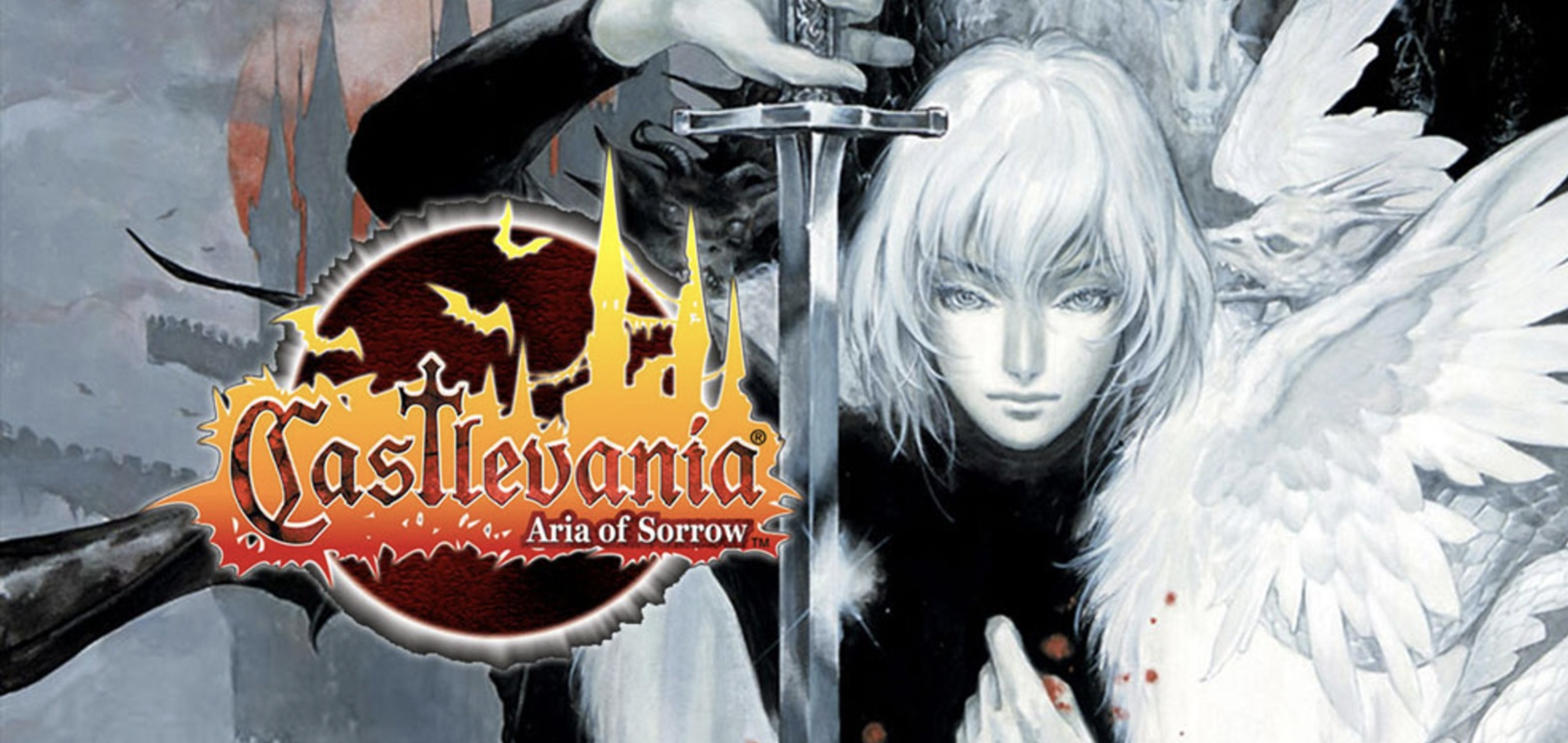
I was lucky enough to play Aria of Sorrow on a CRT TV via my GameCube and Game Boy Player. And boy am I happy I did! GBA games just sing on a CRT. Everything looked so crisp and beautiful. And while it does have less detail than SoTN, it really does feel like Konami drained every bit of power from the little machine. The character portraits during dialogue look stunning. I was caught off guard by the beautiful royal blue night sky filled with a haunting white moon. Backgrounds look dense with detail, and some of the enemies are fantastic too. My favorite enemy in the game is the ghost of a dancing couple spinning throughout the air; it’s so needlessly over the top but beautiful regardless.
The soundtrack has some pretty catchy tunes, but honestly nothing that really lived rent free in my head like some of the tracks from SoTN or Order of Ecclesia. It does its job very well though. Of course, any GBA game is likely to get heat for the systems pitiful sound chip. It sucks that all of these great games are stuck with such dusty and chunky music, but you get used to it pretty fast. And some would argue there’s a charm to it.
Gameplay:
This is where these games really appeal to me. The Castlevania metroidvania games lean heavily into RPG mechanics. This means picking up armor, weapons, subweapons, and tons of abilities both traversal and non-traversal based. Unlike Symphony of the Night, subweapons are not temporary things you toss away once you get a new one. You keep an entire collection of them and can swap at will, which I greatly prefer. These subweapons and abilities are called “souls” which you get from killing enemies. Sadly the drop rate of these souls vary, and you can spend a few minutes just grinding one enemy and still not get their soul.
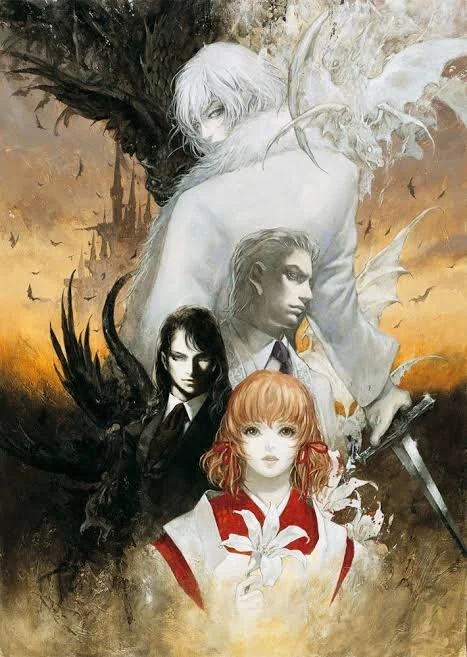
One issue with Aria of Sorrow (and frankly many metroidvanias) is the “worthiness” of abilities. What I mean by that is some abilities are useable no matter what equipment you have, while other abilities have to be equipped via the menu. I don’t quite understand why some abilities are worthy of permanence on your character while others aren’t. For example, you unlock the ability to glide while you jump, allowing you to make long jumps you normally couldn’t. This glide needs to be equipped. But you later find a double jump which you can use whenever and isn’t equippable. Why? Why couldn’t the glide be permanent and usable by holding the jump button? Another metroidvania I played recently, Ori and the Will of the Wisps, has a similar problem. In that game you had to equip the ability to stick to walls. It just felt weird in a game where all the other traversal abilities were permanently fixed to your character.
Of course because this is a Castlevania game, so that means there’s a difficulty spike towards the end. Thankfully because these titles lean into RPG mechanics, you can find a good grinding spot and spend five to ten minutes leveling up. But like with any RPG, you’ll only really “need” to grind if you’re trying to mainline the game. If you spend tons of time exploring, finding secret loot and whatnot, you’ll encounter tons of enemies that help you level up.
Now I want to be honest and say I don’t really get into the nitty gritty meat and potatoes of these games. I have a buddy who has beaten every Koji Igarashi Castlevania game multiple times, 100%ed them, and knows the behind the scenes workings of all the statistics and mechanics. According to him, Aria of Sorrow is a pretty good game, but Portrait of Ruin on DS is the best of the bunch. The only reason I bring this up is because I know there are other people like him who like to learn every detail of a games customization mechanics. A “simpler” player like me sees no issue. But a more analytical player like him might.
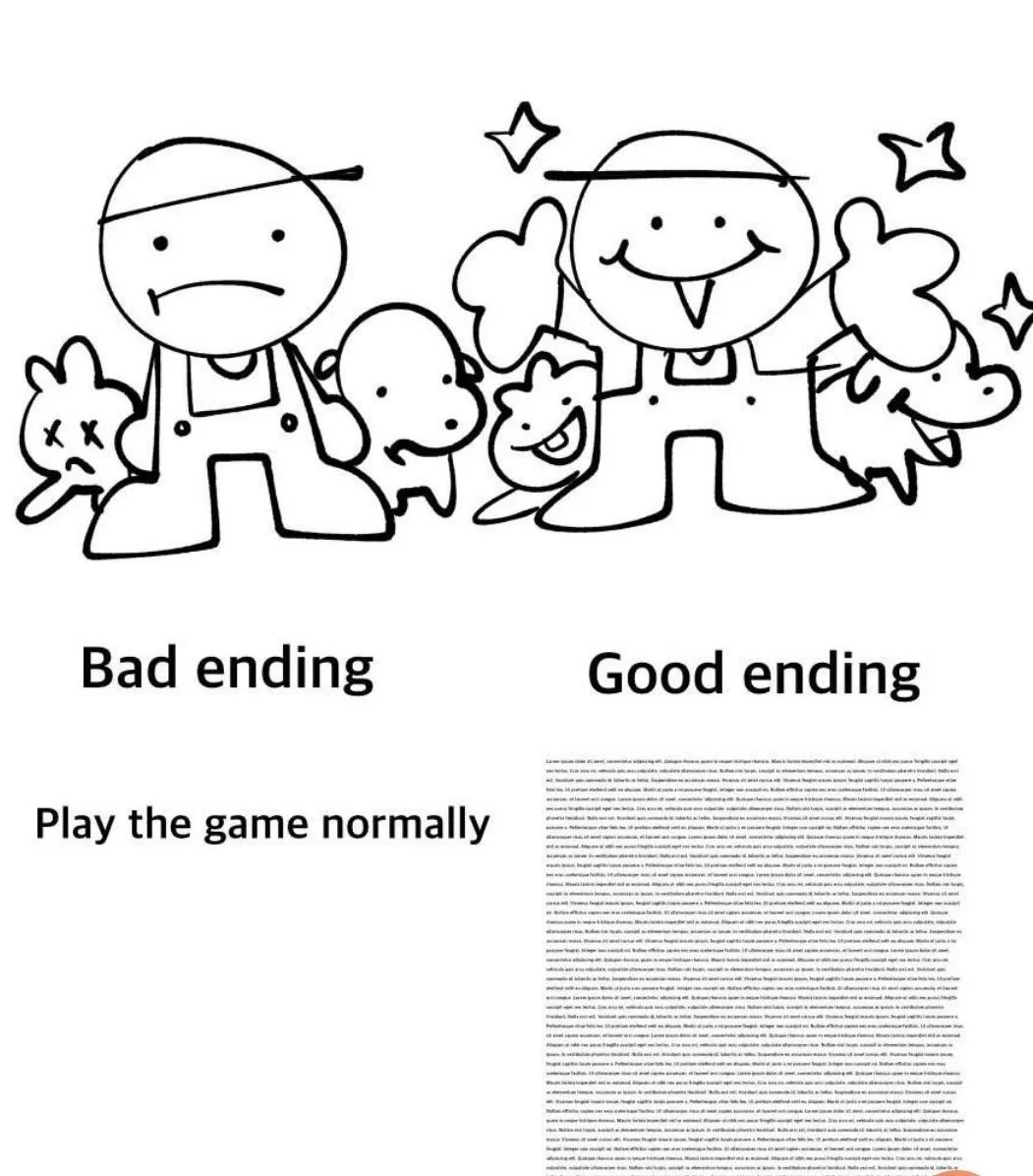
My only main gripe with these game is that you have to jump through some obscure hoops to unlock the good ending. In this game, you have to find three books that have a riddle in each of them. Then you have to figure out the riddle and decipher which soul you need while beating Dracula. Basically, the Iga Castlevania games are like this meme:
Story:
Castlevania games have never really been about the story and Aria of Sorrow isn’t different there. There’s some unique ideas though that make this game special. For one, you aren’t playing as a Belmont or anybody really closely connected to the Belmont Clan. Secondly, well…uh…it’s a spoiler so I won’t say. But our protagonist Soma Cruz has some interesting ties to the mythos of the series.
Even though it’s not very important or present throughout the game, I really like the core story ideas of Aria of Sorrow.
Overall:
Castlevania: Aria of Sorrow is a spectacular swan song for the Game Boy Advance. Circle of the Moon was a semi-stilted first draft (without Koji Igarashi) for a Symphony of the Night sequel on handheld. Harmony of Dissonance was much better. And Aria of Sorrow feels incredibly close to reaching those same heights they did in 1997. There will always be a part of me sad over the fact we never got a SoTN sequel on PS2, but Aria quickly erases that sadness.
It’s a really cozy, quick, and fantastically crafted metroidvania. I like knowing that I can replay this without it taking up too much of my time and feeling satisfied.
Overall, I loved Castlevania: Aria of Sorrow.
(In an effort to move away from traditional numerical scores, I will use the following metric: Hated, Disliked, Felt Neutral, Liked, Loved, Can’t Stop Thinking About)