Reflecting on Half-Life (via Black Mesa)
About a decade ago, I bought Half-Life and played it on my crappy laptop. This laptop was so awful that I vividly remember it heating up and getting noisy while playing the 1998 title. Despite the age of the game and choppy experience with my laptop, I was absolutely enamored with Half-Life. I believe this was around the time I was becoming disenchanted with modern AAA titles. Games that (to me) constantly force feed the player not only the ways to progress, but also the feelings they should have during narrative-driven moments. Half-Life rejects this philosophy. For a game that can take the average player ten hours on their first playthrough (longer if you play the remake titled Black Mesa like I did), it only strips control away from the player for roughly sixty seconds total. During the most integral moments of the games narrative, the player is allowed to walk, turn, observe, and focus on anyplace they want.
Because of this, Half-Life never feels like it’s happening to you as a player.
It feels like it’s happening with you.

There’s something inherently fascinating about the Half-Life IP. The HEV Suit, the Lamba Team logo, the Headcrabs, the orange HUD, the crowbar; all of these aspects and many more feel like some of the most legendary pieces of iconography in video game history. They are on par with or even surpassing things like the Energy Sword from Halo, the Lancer from Gears of War, or the BFG from DOOM. And yet, because of Valves peculiar lack of Half-Life media, there’s really not that many ways a player can experience these pieces of iconography. There’s the ‘98 original game, Half-Life 2, Half-Life 2 Episode 1 and 2, the fan-made remake of HL1 known as Black Mesa, and Half-Life Alyx. So if you’re primarily focused on the Valve developed pieces of Half-Life media, there’s really only five of them after nearly thirty years of existence.
As somebody who is completely exhausted of big corporations draining every single bit of life from all of their IP; I find the restraint on Valves part entirely refreshing.
As I made my way through the Black Mesa Research Facility, I couldn’t help but smile as I smacked Headcrabs with my crowbar and took down Barnacles with five pistol shots. The freedom to smash windows open and scavenge offices for supplies felt oddly freeing even by 2026 standards. The guns felt just as good as I hoped. Of course you get your typical shotgun, pistol, revolver, and submachine gun; but you also get some unique weapons like the Hivehand, which shoots out small flying aliens to chew apart your enemies. While non of the weapons here hit the fame level of Half-Life 2’s Gravity Gun, I was still more than happy with my arsenal here.
Oftentimes in modern gaming discourse, the topic of “yellow paint” will come up. For those blissfully unaware of this topic; developers actually smear immersion-breaking streaks of yellow paint over their environments to give players an idea of where to go.
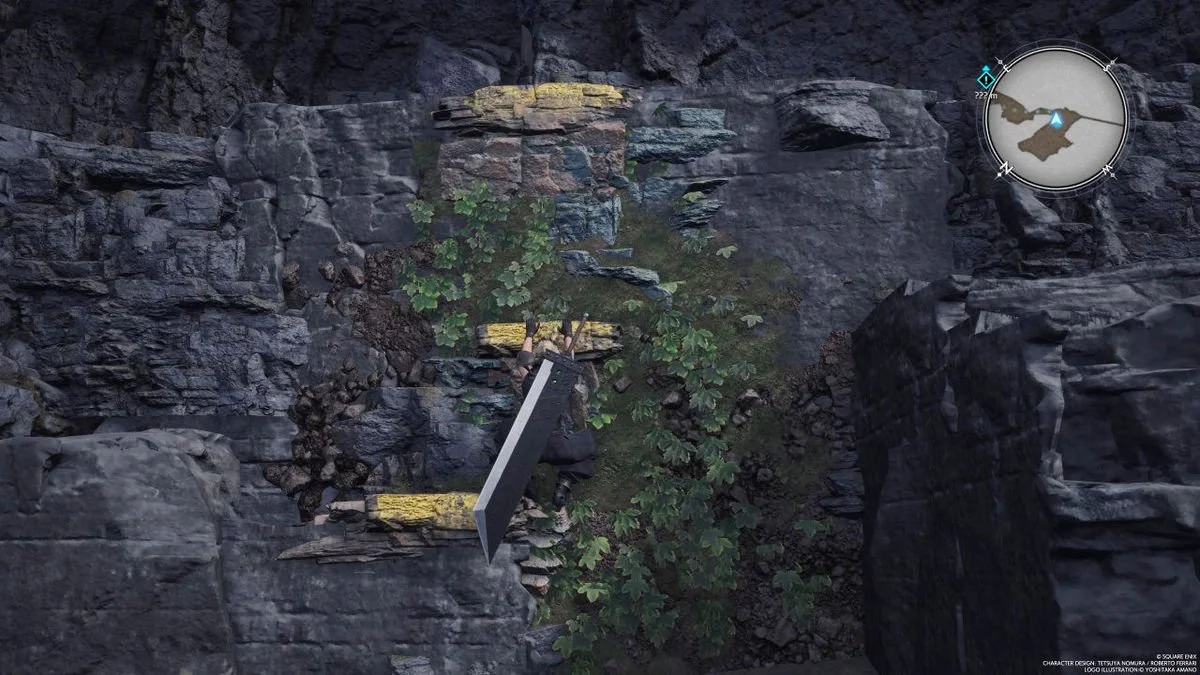
I’ve been saying this for ages, but the concept of yellow paint isn’t inherently a bad thing. But does it legitimately have to be… yellow paint?
During my many hours in Black Mesa, I was genuinely awestruck at how the game was able to naturally telegraph to me where I was supposed to go. Sure, there are tons of air vents sealed up in the research facility, but oh…wait a second…that one has a red light shining through it. What happens if I hit the cover with my crowbar? Oh! A new path!
And the best part? This red light didn’t seem out of place in the Black Mesa Research Facility. It felt entirely natural because there are other lights like this scattered about. It’s been a while since I touched the original ‘98 Half-Life, so I’m not sure if I should credit this expert funneling to Valve or Crowbar Collective, but my memories of the original game tell me that Valve had most to do with the ingenious level design present in this game.
Not all level design is superb though. Any Half-Life fan knows of the infamous Xen levels. In the original game, Xen was about the last twenty-five percent of your adventure. But in the Black Mesa remake, Xen is more like thirty-five to forty percent. The Crowbar Collective were able to make the Xen levels look and feel jaw dropping. The first-person platforming felt right, reminding me of 2020’s Doom Eternal. The environmental story-telling present in the earlier portions of the game is just as strong on Xen. We see old research facilities and zombified enemies wearing HEV suits just like Gordon. We cross gigantic alien factories and realize that the aliens we’ve been fighting the entire time were being controlled by another species. We also witness larger and more violent aliens being manufactured in these factories. Okay, so we can piece together that even Gordon Freeman was ignorant to Black Mesa’s deep research on Xen, but who is manufacturing these enormous aliens? I mostly love Xen, but I definitely felt like it was a bit too long. I wish Crowbar Collective kept the length of the Xen portion faithful to the original game.
When we finish Xen, we also finish our adventure. The enigmatic G-Man thanks us for allowing his employers to take over Xen. He then offers us a choice. We either enter a battle against aliens with absolutely no weapons, or we agree to go into statis until his employers need our services once again. There’s really only one choice- we enter the statis.
While there are some bits and pieces of genuinely engaging story in Half-Life 1/Black Mesa, that’s not really the point of the experience here. Half-Life offers some moments of truly engaging FPS combat against compelling enemies with intelligent AI, but at the end of the day- Half-Life is about being in a virtual space.
Two years prior, Super Mario 64 proved that three-dimensional movement can be fun and engaging in well made three-dimensional levels.
Games from the same era like Sonic Adventure, Crash Bandicoot, Ocarina of Time; they all excelled in three-dimensional levels.
To me, Half-Life doesn’t feel like it has any levels. Sure, there are easily identifiable areas with distinct characteristics, but Half-Life comes across as one seamless and organic flow of events. While this might come off as corny or cliche, Half-Life feels more like an experience than a game at times. In the modern age of the 2020’s, it often feels like AAA developers are spoon-feeding me tutorials and emotions like a parent feeds applesauce to their infant.
And it makes me so grateful for Half-Life.